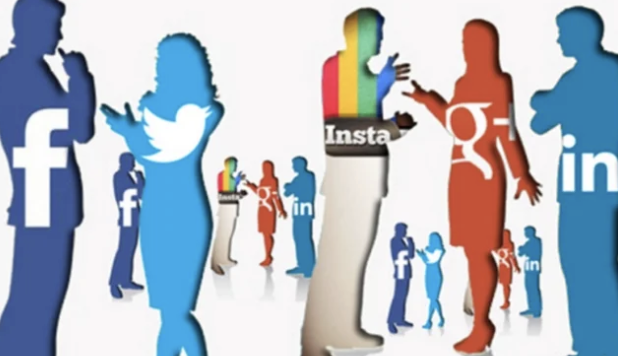
Scroll through your social media feed right now.
What do you see? Vacations. Celebrations. Perfect meals. Happy couples. Accomplished professionals. Witty observations.
Now scroll through your own profile. What have you posted lately? Probably the highlights. The good angles. The wins.
Here’s the uncomfortable question: where’s the rest of it?
Where’s the Tuesday afternoon boredom? The argument with your partner? The insecurity about your job? The messy kitchen? The ordinary face without filters?
They’re not there. Of course they’re not. That’s not how social media works.
But here’s what happens: when we only see everyone else’s highlights and only share our own, we start to believe something false. We believe everyone else’s life is a highlight reel, while ours is the blooper reel.
This isn’t just a feeling. It’s a fundamental shift in how we understand ourselves and others. And it’s affecting us more than we realize.
Real Explanation: The Performance of Self
Sociologist Erving Goffman had a theory about how we present ourselves. He said we’re all performers, with a “front stage” and a “back stage.”
Front stage is where the audience sees us. We’re on. We’re performing. We’re showing the version of ourselves we want others to see.
Back stage is where we can relax. No audience. No performance. Just us.
Before social media, these stages had clear boundaries. Your front stage was work, parties, family gatherings. Your back stage was home, alone time, close relationships.
Social media blew up those boundaries.
Now your front stage follows you everywhere. Every moment is potentially performative. Every meal could be content. Every thought could be a post.
The Comparison Trap
Psychologists call it “social comparison theory.” We evaluate ourselves by comparing to others. It’s natural. It’s human.
But social media weaponizes this tendency.
When you compare your ordinary Tuesday to someone’s curated highlight reel, you lose every time. You’re comparing your reality to their performance.
The math doesn’t work:
- You see their vacation photos, not their credit card bills
- You see their relationship posts, not their arguments
- You see their career wins, not their rejections
- You see their perfect angles, not the 50 photos they deleted
Multiply this by hundreds of people, thousands of posts, and years of scrolling. The cumulative effect on self-esteem is devastating.
The Feedback Loop
Here’s what makes it worse: social media trains you to seek external validation.
Post a photo. Wait for likes. Feel good when they come. Feel bad when they don’t. Post again.
You’re not just sharing anymore. You’re performing for approval. And your brain treats likes as social rewards, releasing dopamine just like food or money would.
The result: You start shaping your identity around what gets approval. You post what performs, not what’s real. You become the version of yourself that gets likes, not the version that is you.
The Identity Fragmentation Problem
When you maintain different versions of yourself across platforms, something interesting happens.
On Instagram, you’re aesthetic and aspirational.
On LinkedIn, you’re professional and accomplished.
On Twitter/X, you’re witty and opinionated.
On TikTok, you’re trendy and relatable.
On Facebook, you’re family-friendly and nostalgic.
Which one is real?
They all are. And none of them are. You’re fragments scattered across platforms, with no unified self.
This fragmentation creates internal stress. You have to remember which version you’re supposed to be in which context. You monitor yourself constantly. You lose touch with what you actually think and feel, as opposed to what you post.
The Rise of the Personal Brand
“Personal branding” advice tells you to treat yourself like a product. Curate your image. Manage your reputation. Be consistent across platforms.
There’s practical wisdom here. But there’s also something troubling.
When you treat yourself as a brand, you start to see yourself as an object to be managed rather than a person to be lived. You optimize for marketability instead of authenticity. You ask “How will this look?” instead of “How does this feel?”
This isn’t necessarily bad in small doses. But as a way of life, it’s exhausting and ultimately empty.
Step-by-Step Fix: Reclaiming Your Identity
You don’t need to quit social media entirely (unless you want to). But you do need to use it more intentionally.
Step 1: The Unfollow Audit
Your feed shapes your reality. Curate it deliberately.
Action:
Go through everyone you follow. Ask three questions:
- Does this account make me feel good about myself?
- Does it educate, inspire, or genuinely entertain me?
- Would I miss it if it were gone?
If the answer to any is “no,” unfollow.
This includes friends. Just because you know someone doesn’t mean you need their content in your feed daily. Real friendship exists outside social media.
Special attention to:
- Accounts that trigger comparison
- Accounts that make you feel inadequate
- Accounts you follow out of obligation
- Accounts that promote unrealistic standards
Step 2: The Notification Purge
Every notification is a designed interruption. It’s engineered to pull you back in.
Action:
Go to your phone settings. Turn off ALL non-essential notifications.
For social apps, consider keeping ONLY:
- Direct messages from friends
- Comments on your posts (if you want engagement)
- Nothing else
You don’t need to know someone liked a photo from 2017. You don’t need to know someone you don’t know started following you. You don’t need hourly updates.
Check social media when you choose to, not when your phone tells you to.
Step 3: The Reality Check Practice
When you find yourself comparing, pause.
Ask yourself:
- What am I actually seeing here?
- What am I NOT seeing?
- Is this a complete picture or a highlight?
- How would I feel if someone saw my life through only my best moments?
Then ask:
- What’s true about my life right now?
- What am I grateful for?
- What’s going well that doesn’t make it to social media?
This practice retrains your brain to distinguish between performance and reality.
Step 4: Post With Purpose
Before posting anything, pause.
Ask:
- Why am I posting this?
- Am I seeking connection or validation?
- Would I still value this moment if I couldn’t share it?
- Does this represent something true about me?
If the answer is “I want likes” or “I’m bored,” reconsider. Posting from emptiness usually leads to regret.
If the answer is “This genuinely matters to me” or “This might help someone,” go ahead.
Step 5: Create Offline Identity Anchors
Your identity shouldn’t live entirely online. Build parts of yourself that have nothing to do with social media.
Ideas:
- A hobby you do alone, without documenting
- A skill you’re learning privately
- Relationships you maintain offline
- Places you go without your phone
- Thoughts you keep just for yourself
These anchors remind you that you exist beyond the algorithm.
Step 6: Scheduled Digital Sabbath
Start small. One afternoon a week, go offline completely.
What to do instead:
- Be bored (boredom breeds creativity)
- Be present (notice your actual surroundings)
- Be with people (actual conversation)
- Be physical (move your body)
- Be quiet (let your brain rest)
The first time feels strange. By the third or fourth, it feels like freedom.
The Deeper Question
Beyond practical fixes, there’s a deeper question worth considering.
Who are you when no one’s watching?
Not your profile. Not your posts. Not your carefully curated image.
Just you.
If that question is hard to answer, social media might have taken more from you than you realize. The good news is you can get it back. Not by quitting entirely, but by becoming more intentional about how you participate.
Social media is a tool. Like any tool, it can build or destroy. The difference is how you use it.
The Bottom Line
You are not your profile. Your worth is not your follower count. Your life is not your feed.
The people who love you don’t love your curated highlights. They love your ordinary presence. They love you back stage, when the performance stops.
Don’t let the front stage consume everything. Save some of yourself for the people who matter most – including yourself.
How has social media affected your self-image? Share your experience in the comments – your honesty might help someone feel less alone.